Research Centre for the Icelandic Horse to Be Established at Hólar in Hjaltadal
09.07.2026
Letter of Intent Signed at the Opening Ceremony of Landsmót Hestamanna
One of the highlights of the opening ceremony of Landsmót Hestamanna at Hólar in Hjaltadal this evening was the signing of a letter of intent to establish a University of Iceland Research Centre at Hólar dedicated to research on the Icelandic horse.
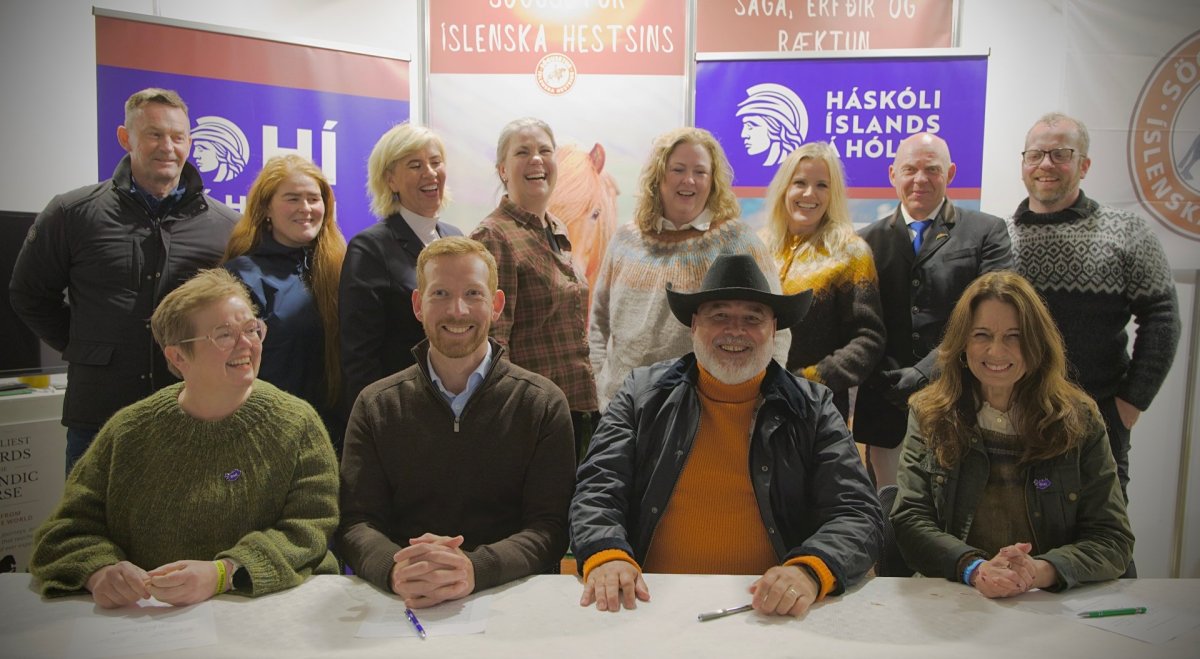
The letter of intent was signed by Logi Már Einarsson, Minister of Culture, Innovation and Higher Education; Silja Bára R. Ómarsdóttir, Rector of the University of Iceland; Hólmfríður Sveinsdóttir, President of the University of Iceland at Hólar; and Magnús Barðdal, Mayor of Skagafjörður.
"The Icelandic horse is part of our national identity, our economy, tourism, sport, history and culture. It is also a subject that calls for high-quality research, interdisciplinary collaboration and effective dissemination of knowledge," said Logi Már Einarsson, Minister of Culture, Innovation and Higher Education, during the signing ceremony. "It is therefore fitting that the University of Iceland establishes a research centre for the Icelandic horse at Hólar in Hjaltadal in close cooperation with the state and the municipality. In this way, the unique strengths of the region will become a source of new knowledge for Iceland and the wider world."
An Important Milestone for Iceland's New University Network
The new research centre will become part of the University of Iceland's Institute of Research Centres, which, under the founding agreement of the new university network, will be based at the University of Iceland at Hólar. It will become the Institute's fourteenth research centre, with the long-term goal of employing two permanent staff members at each centre across the country.
"The establishment of the University of Iceland Research Centre at Hólar marks an important milestone in the development of our new university network and reflects our vision of strengthening research and higher education throughout Iceland," said Silja Bára R. Ómarsdóttir, Rector of the University of Iceland.
She emphasized that the University's research centres are powerful drivers of new knowledge, connecting researchers, industry and local communities while creating opportunities for international collaboration.
"This letter of intent also represents an important commitment to strengthening the University of Iceland's Institute of Research Centres for the future."
Silja Bára added that the new centre will build on the unique expertise in Icelandic horse studies that has developed at Hólar over many decades, making that knowledge even more visible and influential.
"The research centre will provide a significant boost for the University of Iceland at Hólar within the university network, creating a strong platform for research, education and public outreach. At the same time, it will strengthen scientific knowledge of the Icelandic horse—one of Iceland's most treasured national assets—and create new opportunities for collaboration and knowledge creation that will benefit both Icelandic society and the international academic community."
The new university network was established through amendments to the Public Universities Act that came into effect on 1 July. It is based on cooperation between the University of Iceland and the University of Iceland at Hólar. Within the new structure, the University of Iceland serves as the parent institution, while the University of Iceland at Hólar operates as a specialised member university with its own governing board and president. The aim is to strengthen education and research, enhance support services, increase collaboration with industry and society, and create a stronger framework for higher education throughout Iceland.
Building on Decades of Expertise in Equine Studies
Hólmfríður Sveinsdóttir, President of the University of Iceland at Hólar, noted that the new centre will be the first University of Iceland research centre dedicated specifically to the Icelandic horse, and also the first with direct links to the University's Faculty of Health Sciences.
"It is extremely important that Iceland continues to play the leading role it has long held in research and education related to the Icelandic horse. We must support this work through strong research and outstanding people for the benefit of the breed. I am particularly pleased that this will take place under the umbrella of the University of Iceland's Institute of Research Centres here at Hólar—the cradle of education and research on the Icelandic horse."
She explained that the Institute of Research Centres plays an important role in research throughout Iceland while working closely with local communities and industry.
Hólmfríður also stressed the importance of incorporating the educational activities, historical research and public outreach carried out by the Icelandic Horse History Centre into the new research centre. She noted that the academic expertise of the centre's first director will help shape its future research priorities.
Initially, the centre will focus on research into equine-assisted services, a rapidly growing field worldwide in which the Icelandic horse is particularly well suited. Additional research areas will include riding instruction, equine tourism, gaited horse farriery and breeding science.
"The goal is for the centre's priorities and objectives to be developed in cooperation with the Equine Studies Department at the University of Iceland at Hólar and with key stakeholders in the Icelandic horse community, including the National Federation of Icelandic Horse Associations, the Icelandic Farmers' Association, the Association of Professional Horse Trainers and the Farmers Association of Iceland. The director will also work closely with the Faculty of Health Sciences and other academic disciplines at the University of Iceland as appropriate."
A Ceremonial Opening to Landsmót
The opening ceremony of Landsmót Hestamanna began with an impressive parade of riders representing Icelandic horse clubs from around the country entering the competition grounds. The event was officially opened by Logi Már Einarsson, Minister of Culture, Innovation and Higher Education. Addresses were also delivered by Gísli Gunnarsson, Bishop of Hólar, and Magnús Barðdal, Mayor of Skagafjörður.
"For decades, Hólar has been the heart of knowledge about the Icelandic horse. With this decision, we are both preserving that strong heritage and supporting its continued development for the future," said Magnús Barðdal.
The Municipality of Skagafjörður has committed ISK 7.5 million to support the research centre over the next three years.
"We welcome this milestone and see it as an important step in strengthening the activities of the University of Iceland at Hólar."
Among those attending the signing ceremony were Sigrún Brynja Einarsdóttir, Permanent Secretary of the Ministry of Culture, Innovation and Higher Education; Sæunn Stefánsdóttir, Director of the University of Iceland's Institute of Research Centres; Víkingur Gunnarsson, Dean of the Equine Studies Department at the University of Iceland at Hólar; Silvía Sigurbjörnsdóttir, Chair of the Association of Professional Horse Trainers; Ólafur Þórisson, Chair of the Icelandic Horse Farmers' Association; Elvar E. Einarsson, Chair of the Skagfirðingur Riding Club; and Linda Björk Gunnlaugsdóttir, Chair of the National Federation of Icelandic Horse Associations.
 Facebook
 Instagram